If you lead a team or operate a business, you know to expect the unexpected. Even the most far-sighted prognosticators have predicted little of what the post-pandemic years would bring – and how multi-layered challenges would affect every industry and market. The reality of the VUCA world (accepting the certainty that Volatile, Uncertain, Complex and Ambiguous events will derail your plans) is why we stress that Planning & Readiness is one of the most important competencies for development, for individuals and organizations. Scenario Planning is a key tool to advance your Planning & Readiness. With scenario planning, you can begin to “know what you don’t know” and make plans around a sure-to-be uncertain future. Read on for our guidelines for a successful team Scenario Planning exercise.


Read More

It hasn’t been an easy year for nurses. One of the first lines of defense against COVID-19, nurses across the nation are showing up as examples of leadership and resiliency in the face of a complex and ever-changing threat. We were privileged to talk with Cheri Johnson, Chief Nursing Officer and Senior Vice President of Patient Care at Woman’s Hospital, about her experience leading these healthcare heroes – and her advice for others who are leaping feet-first into a fast-paced and rewarding career.Her work gave her opportunity early on to learn the value of mentorship, when she was abruptly moved to a manager role following leadership changes as a young nurse at Baton Rouge General. Jumping straight into the deep end and needing to seek out the tools to be successful, Cheri began to network with managers in other departments – just asking questions about scheduling, evaluations, and other daily practices. She found that not being shy about asking questions eventually builds the kind of close relationships where you can have multi-faceted, long-range mentoring discussions. Be sure to look outside of your bubble for these relationship connections – Cheri recommends seeking out multiple mentors, “because everyone brings something different to the table. Seek out people who can help you be more well-rounded, and don’t just focus on one area.”

Read More

Here in Louisiana, the weather plays just as big a role in business strategy as talent management, revenue growth and market share. You get used to it – doing your best to factor in natural events that can be planned for and anticipated, but never predicted. That being said, the weather can still surprise us. This week, our state is facing yet another unprecedented challenge with the possibility of back-to-back hurricanes making landfall along the Gulf Coast.Over and over again, I’ve seen the leaders I work with step up and care for their teams and communities in the wake of storms – and do it all again when the next storm inevitably comes. I’ve learned a lot from them about resilience, duty of care, and rebuilding when it seems like everything is lost. I’d like to share some of the best lessons these leaders have taught me, in the hopes of helping and inspiring others who are guiding their teams through challenging and unpredictable events.

Read More

The business world is increasingly complex and changing more rapidly than ever. For 25 years, our Leadership Coaching Series has prepared leaders to tackle this volatile climate with resiliency, adaptability and nimbleness. The goal is not just to compete, but to add value in the midst of constant change and uncertainty. It’s not enough just to survive – we want to help leaders and teams thrive.

Read More

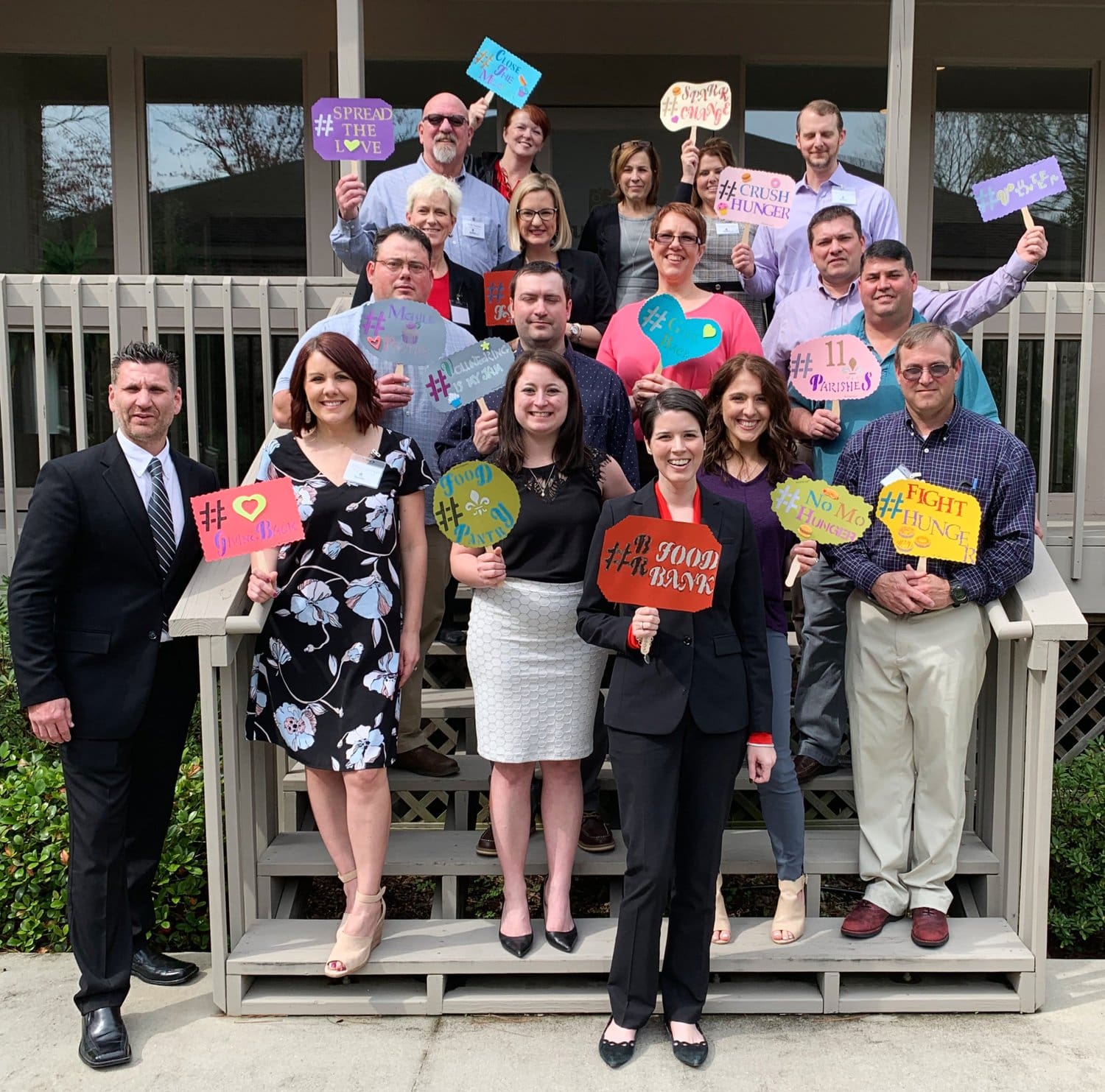
When the Greater Baton Rouge Food Bank was selected as our Spring 2020 LAB Grant partner, we did not anticipate that a global pandemic would turn our work on its head and bring volatility and uncertainty in its wake. As the Baton Rouge community faced severe economic and health challenges, the Food Bank stepped in to fill the gap: supplying seniors at higher risk of isolation and infection, setting up mobile distribution centers to better reach those in need, and quickly scaling operations with the Louisiana National Guard to serve 50,000 additional people per month.If there’s any silver lining to COVID-19, it’s that we’ve been privileged and humbled to witness the tenacity of our community institutions, stepping up to care for the marginalized in unbelievably challenging circumstances. It’s been an honor to work with the Food Bank through this VUCA event, and play a small role in addressing their space functionality and strategic growth for the years to come.

Read More

The Coronavirus and resulting quarantine and social distancing measures descended quickly on a mostly unprepared workforce. Leaders had to act quickly to figure out how to keep their employees safe and their operations still running. This involved new systems to manage workflow, pivoting communication strategies, and re-prioritization of goals and objectives. The scale and speed of these changes have left many managers wondering how to effectively guide and lead their teams when they may not be able to interact with them in person.There are lots of articles and webinars providing information and training on effective remote leadership, and while these resources are helpful, this is also a good time to remember that the fundamentals of leadership remain – what is essential during this crisis, is and will remain essential when we are all back in the office. Certain critical leadership skills have emerged during the Coronavirus pandemic – communication, focus on results and flexibility. But these leadership skills have always been critical. And whether in the office or out of it, employees won’t be lowering their standards for supportive and effective leadership.The tools may change, and the circumstances are often out of your control – but best leadership practices are fundamental for a reason: 

Read More

Today we are seeing more and more companies publicly stating their intention to expand diversity and inclusion efforts in the workplace. These statements come in many forms, but generally center around a desire to beef up their strategies, and ensure that Black, POC, LGBTQ, and other minority employees feel heard and valued. While this is a praiseworthy end goal, there has been some criticism levied at D&I practices that are one-off, or tokenizing – and do little to change the long-term culture.Making diversity and inclusion an indelible part of your organization’s culture means putting resources towards non-exploitative practices that make room for conversation, build genuine relationships throughout the company, and lead to system-wide, sustainable change – thus attracting the next generation of values-driven talent.I’m a fan of one niche strategy that establishes clear and replicable parameters for communication and culture change – reverse mentoring. This refers generally to the practice of pairing younger employees with more established leaders, either for technological knowledge transfer (early-career employees may have more knowledge of the newest systems) or to create cultural bridges – giving newer employees agency to share their experience of the workplace, career pathways, and the development opportunities available to them. If implemented properly, reverse mentoring can be a powerful tactic to expand inclusion in the workplace. Here’s how:The Benefits of Reverse Mentoring For Building Inclusion & Transparency

Read More

We’re in a period of social upheaval, and many have expressed the desire to broaden their perspective and grow from these events. Leaders, especially, have a weighty responsibility during times like these – starting with making sure that every employee is heard, valued, and protected in the workplace. Unfortunately, systemic racism across all facets of American life is deeply embedded and won’t disappear overnight, armed only with our good intentions. The goal for leaders – and really, for everybody – should be to start where they have the most influence. Now is the time to thoughtfully and with firm purpose survey our workplaces, examine our positions as leaders, and focus on the immediate good that we can do.In order to make your goals and intentions actionable, focus first on what you can change across these three levels – systemic, interpersonal, and personal. This is a starting point for building workplaces free of prejudice and injustice – but I emphasize, it is only a start. While policy and relational changes are important, it is vital to continually examine and deconstruct the unconscious biases that live within all of us. These biases do damage in the workplace by making employees feel less-than or marginalized, and they must be rooted out. The Harvard Implicit Bias test can be a good tool for you (and your team) for beginning to understand and name the areas where hidden biases emerge.Breaking down these barriers will be ongoing, but it’s necessary. And far overdue.Personal Change: Show Solidarity And Empathy With Your Whole Self

Read More

The Coronavirus pandemic has led to major disruption in the business environment, and has caused many of us to think more deeply about what we’re doing, and how – are we building a career that can withstand storms? Are we allowing our vision and purpose to sustain us, even as difficult circumstances call for flexibility in how we approach that vision? Are we learning the right lessons through this crisis?Success Labs’ founder, Bill Phillips, has had to weather many a crisis since starting his company, ‘Career Assessment Services,’ in 1984. What started off as work doing career counseling and outplacement services changed and evolved as the market changed – and eventually led to Success Labs being an early advocate in the leadership development space.“I think back to the number of times the business has had to be resilient and change in order to survive – whether the market changed or we were slammed with hurricanes. In my 30 years of being in business we had to make a major change just to survive probably every four or five years.”He emphasizes being willing to chase a dream, even if you find yourself having to pivot for that dream. “I’ve just always wanted to do the things I’m interested in. I’ve always tried to base my career off of that.” After all, one key to resiliency and success is managing your overall well-being – and being inspired by your work makes that much easier, especially when times get tough.

Read More

Certain words tend to get thrown around a lot during moments of crisis. “Agile.” “Resilient.” “Adapt.” “Pivot.”Leaders often have an engrained desire to turn challenges into opportunity, and they latch onto these words as a way to articulate a vision for the future, and motivate their teams through a difficult period. During VUCA events these visionary leaders are more important than ever, and their ingenuity will be what gets us through the COVID-19 emergency. But we have to admit that in times like these, words don’t really cut it. The words we use need to be backed up with action – and that can only come from a strong understanding of what we actually mean when we praise the qualities of “resilient leadership” and “agile businesses.”What does it mean to be a resilient leader? What does that leader do – what qualities do they possess? How do you actually go about making your team or your company agile? Read on for our thoughts on harnessing the power of RESILIENCY and AGILITY during challenge periods, and more importantly – how to turn those words into action.

Read More

Think back to the life of a student. Juggling school, extracurriculars, work and internships… the building years can be intense, especially when you are trying to set the stage for a fulfilling and impactful post-grad career. Add graduating in the middle of a pandemic to the mix, and you have a recipe for an extraordinarily hardworking, versatile, and determined group of people. Future employers, keep your eye on the class of 2020!

Read More

The post-Coronavirus world will look a little different from the old. We are all currently living and doing business in a VUCA environment – and once the immediate challenge dissipates, our organizations, teams, and work will have to change to accommodate the new normal. What does this mean for you? And how can you prepare your organization to anticipate and adjust to these changes?Don’t fear the worst. Leading through uncertainty involves first and foremost a perspective shift – a focus on gratefulness for your people, your business, and your current and future opportunities. With this in mind, release your anxiety about the future. There will be difficulties, but also new avenues for strengthening your business, developing your team and expanding your capabilities as a leader.Begin preparing yourself and your team to be successful in the post-pandemic business environment by embracing these four mindset, work, and culture shifts.

Read More

For 40 years, we’ve partnered with companies to develop high-potential talent, design succession strategies, and transform leadership at every level.  

Explore Our Solutions

Work With Us

Leadership doesn’t wait. Neither should you.

Get Started